In the eco-tourism industry, the prefix ‘eco’ is often used as a shield against scrutiny. We pair it with sustainability and goodness, conveniently ignoring the impact we leave behind. But observing nature is rarely without impact. As a naturalist, I work in the tension between that realization and the preservation of the species I love. If I can turn a spectator into a steward, the influence of my speech becomes the net-positive that is necessary to offset our footprint in the ocean.
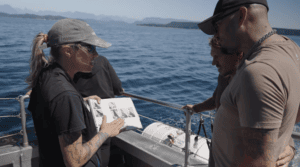
It is a common misconception that being a naturalist is all about pointing. A finger extended toward a six-foot dorsal fin is only the beginning. My real work starts when I lower my hand and begin to describe the invisible: the complex social bonds of a matriline, the acoustic struggle of hunting in a noisy sea, and the harsh reality of an ecosystem under pressure.
One of the most frequent questions I encounter on the water is, ‘Why do humpback whales breach?’ The most popular belief is that this display is purely an expression of play or excitement. While science has yet to pinpoint a singular purpose, those of us who spend our lives on the Salish Sea observe a much more nuanced reality: breaching may serve a variety of purposes, including a stress response to a vessel crossing a whale's path. By providing this context, I shift the guest’s perspective from seeing a ‘performer’ to witnessing a sentient being navigating a busy underwater highway. When we recognize the complexity of these actions, the 'spectacle' disappears, replaced by a deeper desire to protect Campbell River’s largest inhabitants.
What can guests do with this weight? I know it feels heavy. That sense of responsibility is the foundation of a real connection. The realization that these animals have not only survived but persist despite the obstacles we’ve placed in their way is what makes their presence so incredible. It is the fuel for change.
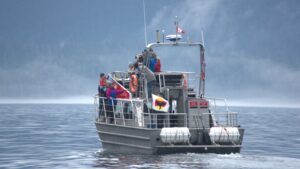 I don't just leave them with the challenges; I hand them the tools for the solution. By sharing the small, tangible changes they can make and highlighting the restoration work already in motion, I aim to transform that heaviness into momentum.
I know that not every guest will walk away with a transformed worldview; for some, the message simply doesn't land. My skills as a naturalist are a work in progress, and the industry itself remains imperfect. But when the boat returns to the dock, my goal is that the passengers carry more than just photos; they carry a new perspective. That is the net-positive: ensuring the ocean is better for our having been on it.
Words by Lexie Thomas
About the Author:
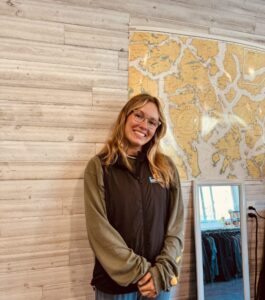 Lexie is a Marine Naturalist for Campbell River Whale Watching. Lexie has been obsessed with whales since the beginning of time, particularly humpback whales. She loves them for their curious and acrobatic nature, as well as the noise of their soothing yet mystical ‘blows’.
Lexie worked in the horticulture industry for 10 years, pursuing a diploma in Horticulture and Greenhouse Technology. She moved to British Columbia from Ontario to pursue a change of career into the field of sustainable ecotourism to bring the public to amazing wildlife encounters right at the edge of their doorstep and to showcase the natural wonder of cetaceans in British Columbia.
Lexie is deeply committed to ocean conservation, eager to contribute to the restoration and health of our marine environments for future generations.